ST108 & its impact on water quality standards for medical device processing
Having high standards of cleanliness and safety is non-negotiable in healthcare. Every reusable medical device must be processed correctly to prevent healthcare-associated infections (HAIs) and protect patients. One critical standard shaping this effort is AAMI ST108, introduced by the Association for the Advancement of Medical Instrumentation (AAMI). The guideline establishes water quality requirements for cleaning, disinfection and sterilization processes—an often-overlooked but essential component of sterile processing.
At HealthTrust Connect 2025, industry leaders gathered for a panel session focused on the updated standard to unpack what this means for healthcare organizations and how to implement it effectively.
ST108 categorizes water into three main types:
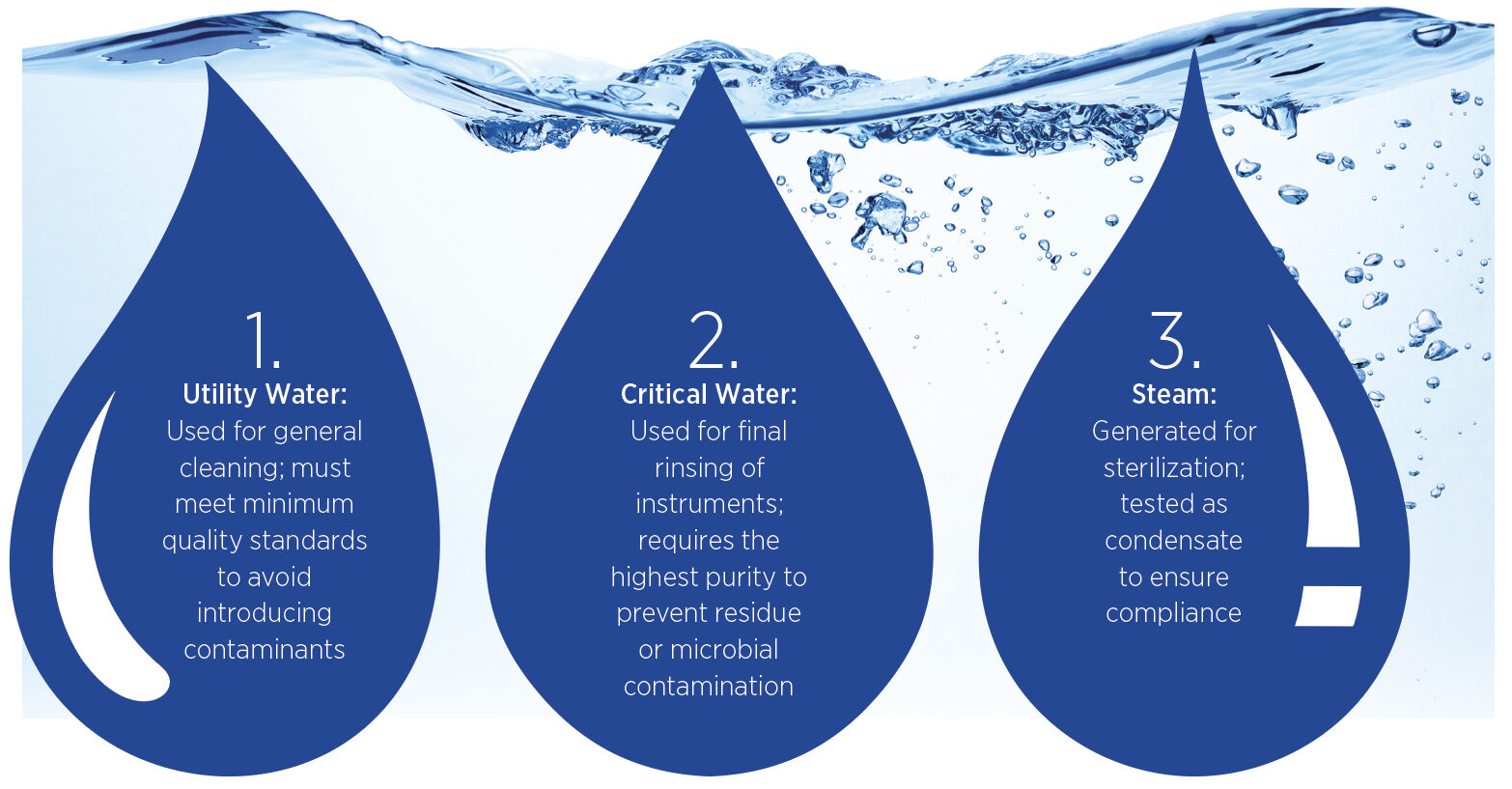
What is ST108?
ST108 replaces previous guidelines, known as AAMI TIR34, and serves as a blueprint for water quality management in medical device processing. It provides detailed guidance on:
- Selecting appropriate water quality for different stages of reprocessing
- Treatment and distribution systems
- Monitoring and corrective actions
- Strategies for bacterial control and environmental impact
- The goal is simple, yet critical: Ensure that water used in sterile processing does not compromise device cleanliness or patient safety. Poor water quality can lead to mineral deposits, biofilm formation and ineffective sterilization—all of which increase infection risk and threaten compliance with Joint Commission requirements.
Why it matters
Water is the foundation of every cleaning and sterilization cycle. If water quality is inconsistent, even the most advanced sterilizers and washers cannot perform optimally. As one panelist shared, the intent is patient safety. While compliance will look different for every facility, the end goal is the same. ST108 provides a road map for healthcare facilities to:
- Reduce HAIs
- Maintain accreditation readiness
- Protect expensive surgical instruments from damage caused by impurities
Implementation best practices
“Surveyors are already asking about ST108, even if enforcement hasn’t started. It’s more of a standard now—it uses language like ‘shall’ and ‘must,’ not just ‘should,’” said one panelist about the imminent requirements for healthcare facilities.

“Implementing ST108 requires a collaborative approach, as it involves teams and departments that include Facilities, Maintenance, Infection Control, Sterile Processing leadership and clinicians,” said panel moderator Jennifer Westendorf, DNP, RN, CNOR, Assistant Vice President, Environmental Performance & Surgical Services at HealthTrust. Constant communication with these teams is essential—especially when planning around disruptions that are likely to occur during installation.
Senior leadership must understand that these new standards are a significant capital investment, but they have meaningful impact on patient safety and operational efficiency.
Roles & responsibilities
Compliance with ST108 is more than a regulatory checkbox—it’s a commitment to patient safety and operational excellence. Facility managers help oversee infrastructure and ensure compliance, while Sterile Processing personnel monitor water quality during device reprocessing. Infection Control specialists can develop systemwide policies and assess risk, while Clinical Engineering teams design and maintain water treatment systems.
This multidisciplinary collaboration ensures every aspect of water use is safe, effective and compliant.
While change won’t happen overnight, starting before the standard becomes mandatory will be helpful. As one panelist summed it up: “You don’t want to tell a surveyor you’re six months away from compliance.”
Jeffrey Keane, BSN, RN, CNOR, Director of Perioperative Projects, Perioperative Services, is helping lead the implementation process at Beth Israel Deaconess Medical Center. He offers three practical tips for other leaders looking to implement ST108:
Tip #1: Work closely with sterile processing, consultants & equipment suppliers to ensure your system meets capacity needs during peak sterile processing hours.
Tip #2: Having Infection Control team members at the table is critical. They help risk-stratify what happens if you don’t comply versus the long-term benefits of investing in compliance.
Tip #3: Location is key. These systems take up a large footprint, so you need immediate visibility for monitoring, audible alarms & maintenance activities.
HealthTrust contracted suppliers for water treatment & sterile processing
Within the Commercial Portfolio
The suppliers listed below can provide specific water processing and monitoring services and equipment to support HealthTrust members creating a plan to meet ST108. In coordination with the facilities, they will work to achieve agreed-upon water system designs and water quality best practices based on the health of local water and the engineering data, operational projections and space considerations provided by the facility. Contracted suppliers include:
Chem-Aqua, Inc. (Contract #7104)
Southwest Engineers (Contract #135726)
Nalco Co., LLC (Contract #3923)
Garratt-Callahan Co. (Contract #3968)
Chemtreat, Inc. (Contract #7271)
Within the Med/Surg Portfolio
To minimize issues with sterile processing equipment, leaders should collaborate with their facilities teams and sterile processing equipment suppliers like the ones below to ensure the appropriate water is being utilized for each phase of the decontamination and sterilization process. Contracted suppliers include:
Getinge (Contract #81849)
Steris (Contract #4675)
Ready to start? Listen to the full session that was held on this topic during HealthTrust Connect.
Share Email Accreditation, Infection Prevention, Medical Devices, Q1 2026, Regulations